

[ad_1]
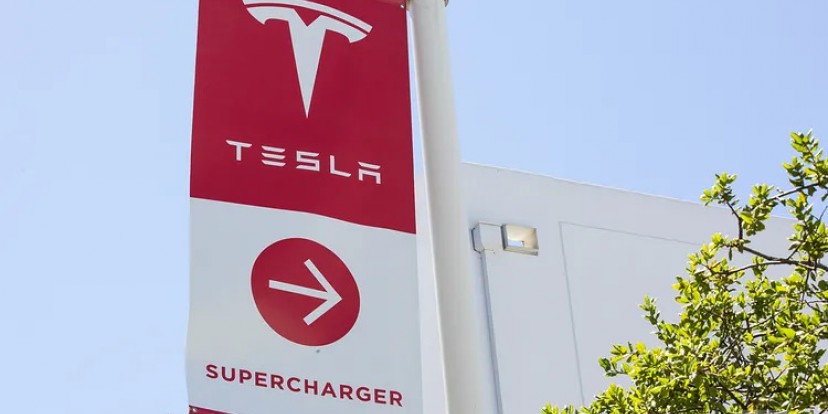
Ford and General Motors recently signed -up for Tesla’s North American Charging Standard (NACS) charging connector, which triggered an avalanche.
Because those three manufacturers control around three-quarters of the entire battery-electric vehicle (BEV) segment in the United States (Q1 2023 registrations), the question is what will happen next?
The Combined Charging System (CCS1) charging connector is not expected to survive the battle with Tesla’s NACS, after the Ford and GM switch.
The Charging Interface Initiative (CharIN) association, which promotes CCS, is probably aware that North America might be a lost cause for CCS – after a transition period of at least 5-10 years. The association criticized Ford’s move and probably will repeat its statement in the case of the GM.
Nonetheless, we must look into the future and ask who might be next to officially confirm the switch from CCS1 to NACS in North America.
As of today, we have confirmed:
Tesla: North American Charging Standard vs CCS Combo 1

Tesla: North American Charging Standard
There are two main types of all-electric vehicle manufacturers – start-ups (like Rivian and Lucid) and established brands (large OEMs).
The decision loop for start-ups is usually much shorter, and they don’t have too many legacy models to worry about. This indicates that at least theoretically, they might decide quickly, as long as this move is considered the right thing to do.
In the case of the large OEMs, things are more complex because some of them – like the European manufacturers – are heavily engaged in the popularization of the CCS standards around the world. The Volkswagen Group also invested in the Electrify America network, which is entirely focused on the CCS (excluding the legacy CHAdeMO units).
The Japanese manufacturers were usually reluctant toward BEVs (besides Nissan, which fought its own battle for CHAdeMO, before moving to CSS), so they will probably simply join the winning party. The same concerns Stellantis.
The South Korean Hyundai Motor Group is committed to electrification, currently using CCS, but very likely will follow NACS if this becomes the mainstream solution in North America (by the way, South Korea might also entirely switch from CCS1 to NACS as well).
We are pretty sure that a red alert was announced at the OEM headquarters – at least in divisions responsible for EV charging. This is now a crucial decision, which charging connector to use in the next-generation models, in 1, 2, or 3 years from now. The decision of charging inlet integration, as well as software development for access to Tesla Supercharging, must be made in advance.
We guess that from the marketing point of view, some OEMs might be willing to announce the switch to NACS as soon as possible. Others will be reluctant (potentially the German automotive industry). We could bet that Rivian, Stellantis, and Hyundai Motor Group might be next. Rivian recently added opened Tesla Supercharging locations to its navigation system, which means that the company is interested in access to the network.
Tesla enthusiasts seem to be pointing at Volkswagen as the biggest loser if CCS1 is dropped in favor of NACS in North America.
An interesting thing is that within a few days, we heard about several manufacturers of charging equipment that intend to add the NACS plug option to their chargers.
That’s not surprising, because fast charging networks must secure native compatibility with the most popular electric cars on the market and it would be hard to ignore Tesla, Ford, and GM combined.
[ad_2]
Source link